


Send Message
Privacy statement: Your privacy is very important to Us. Our company promises not to disclose your personal information to any external company with out your explicit permission.


Dewatering Technology for Food Processing Wastewater: Challenges of Oily and Starchy Sludge
I.Oily Sludge: Once It Adheres, It Persists Oily sludge primarily originates from meat processing, dairy production, food waste, and edible oil manufacturing. This sludge type contains high levels of fats, oils, and proteins, which combine with water to form stable emulsions. Anyone who has handled this sludge on-site will recognise three persistent issues: First, high viscosity. It is considerably stickier than ordinary sludge. It coats pipe walls upon entry and clogs filter gaps once...

When Should Sludge Thickening Equipment Be Installed Before Dewatering?
In designing a sludge treatment system, a key question is whether to install sludge thickening equipment before the sludge dewatering system. There is no universal answer, as the decision depends on influent sludge conditions, operational objectives, and overall system economics. From an engineering perspective, the following scenarios indicate when a thickening stage should be considered. When Inlet Solids Concentration Is Too Low Low sludge concentration directly increases operating...

How Auxiliary Equipment Impacts Sludge Dewatering System Stability?
In practical operation, instability in a sludge dewatering system is often attributed to the dewatering machine itself. However, field experience shows that long-term performance is more closely related to upstream and supporting units. The stability of a sludge dewatering system depends on how well feed, conditioning, conveying and control components operate together as a coordinated process. Why Sludge Dewatering System Stability Is a System Issue? A dewatering unit operates...

The Role and Application Scenarios of Pre-treatment Equipment in Sludge Dewatering Systems
Engineering practice shows that the stability of dewatering performance and the overall reliability of a sludge dewatering system do not depend solely on the sludge dewatering equipment itself. To a large extent, they are determined by the process conditions upstream of the dewatering stage. The role of pre-treatment equipment is to regulate and constrain the inlet sludge conditions before dewatering, thereby creating a more controllable operational basis for subsequent processes. The...

The Ultimate Guide to Sludge Dewatering Equipment: How to Choose Efficient and Durable Systems
1、 Why is Sludge Dewatering a Core Process in Modern Environmental Treatment? In numerous industrial sectors - including wastewater treatment, food processing, and pharmaceutical manufacturing - handling sludge is a critical environmental issue. Untreated sludge occupies significant storage space, incurs high transport costs, and poses a serious risk of secondary pollution. Sludge dewatering equipment is central to solving this problem. This equipment mechanically reduces the moisture...

Key Considerations Before Choosing a Sludge Dewatering System
The goal of a sludge dewatering system is not merely to remove water. In practical engineering projects, clients are concerned with whether the system can operate stably, whether the processing capacity matches on-site requirements, whether the discharged sludge meets subsequent handling needs, and whether operation and maintenance are manageable. Since sludge sources, composition, and site conditions vary significantly, focusing only on single equipment parameters during selection often leads...
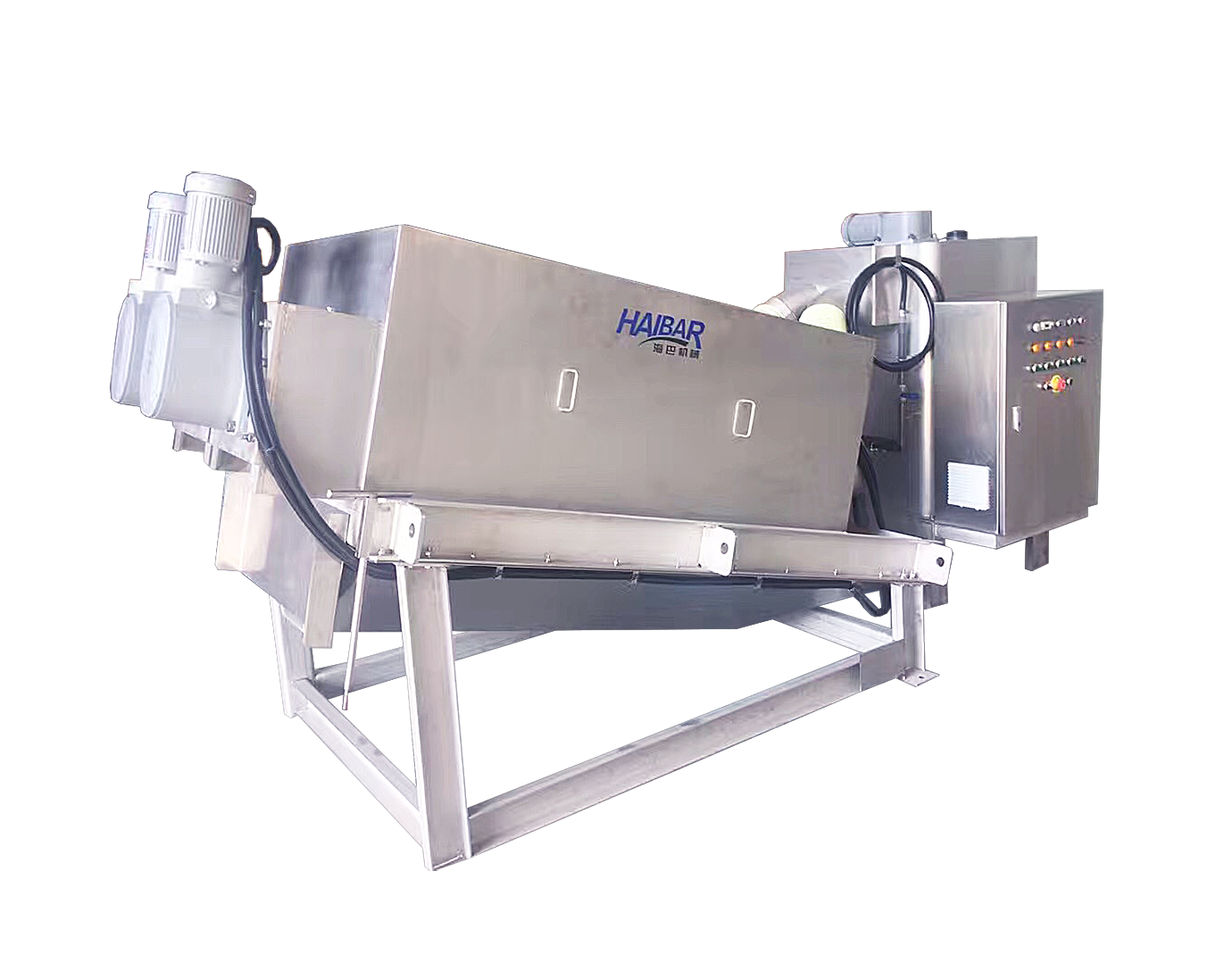
Other Dewatering Equipment Screw Press
The HAIBAR spiral press dewatering equipment, a specialized dewatering device, features a stainless steel body and is suitable for sludge, solid waste, and other material processing scenarios. The equipment achieves efficient dewatering through spiral extrusion, operates stably and is easy to operate, and can operate continuously. It effectively helps reduce material volume and provides reliable dewatering support for solid waste disposal, sludge treatment, and other processes.
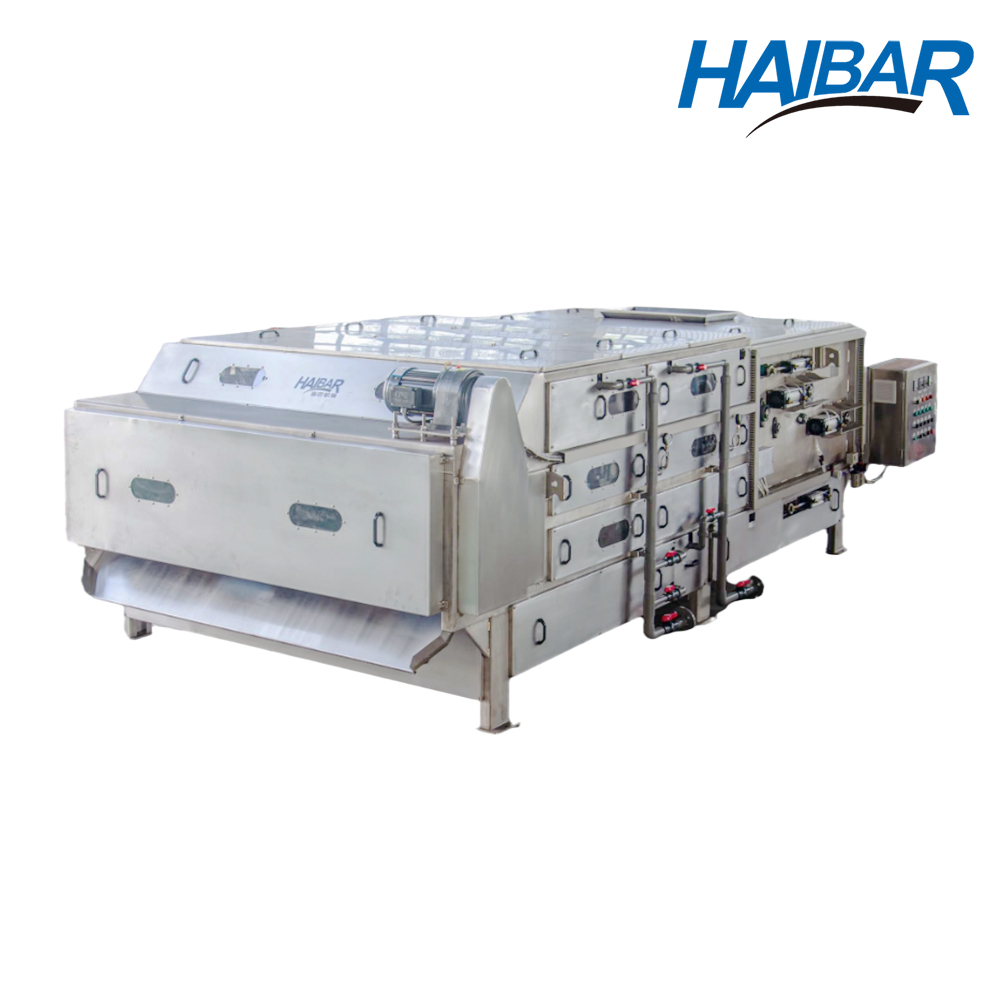
Fruit Vegetable Dewatering Press equipment
The HAIBAR brand fruit and vegetable dehydration press, crafted from stainless steel, boasts a well-organized and durable structure. This equipment is tailored for the dehydration and pressing of fruit and vegetable materials, efficiently processing batches of fruits and vegetables with ease of operation. It provides stable support for the dehydration and pressing process in fruit and vegetable processing.
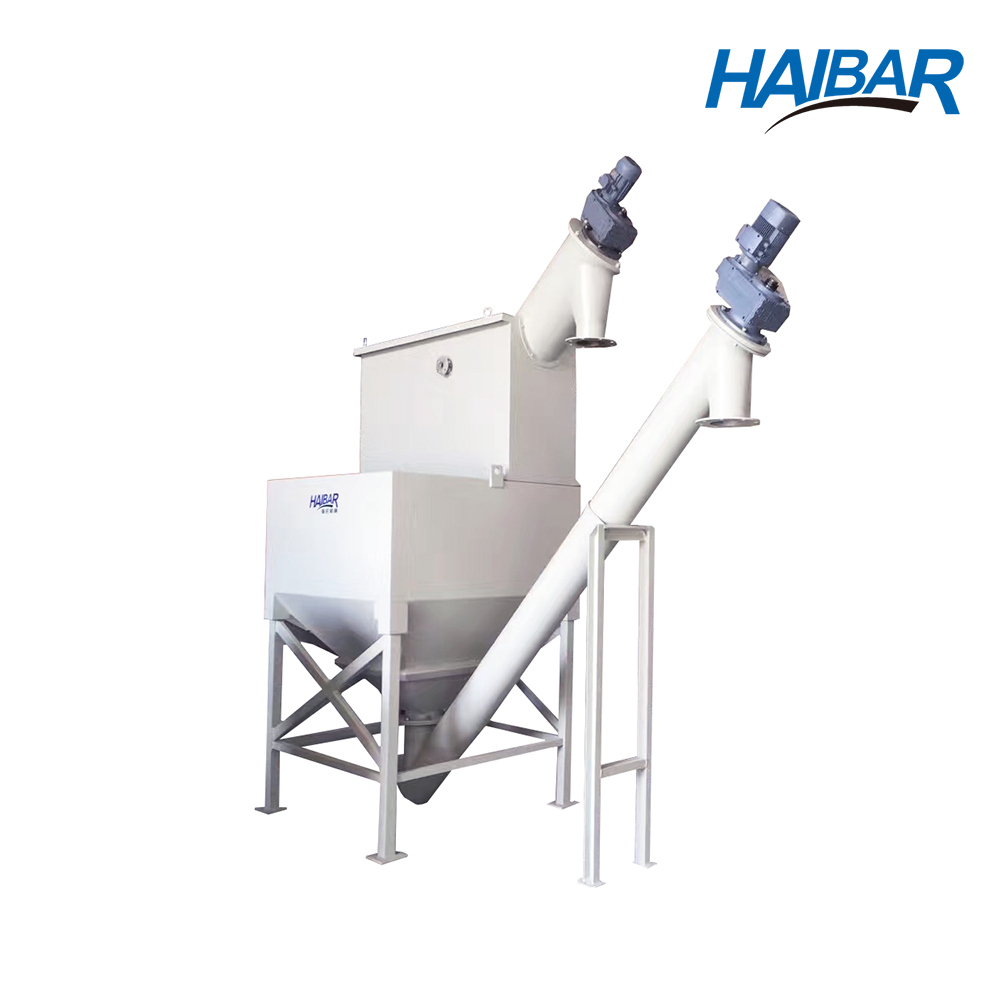
Screening, Grit Grease Removal Unit
This Screening, Grit&Grease Removal Unit is an efficient water treatment equipment launched by the HAIBAR brand, designed specifically for the pre-treatment of municipal and industrial wastewater. It integrates screening, grit (grit means sand and gravel, here referring to sand and gravel separation) and oil removal functions. It adopts a modular structure design, first intercepting solid impurities in sewage through precision screening screens, and then using a spiral conveying system to...
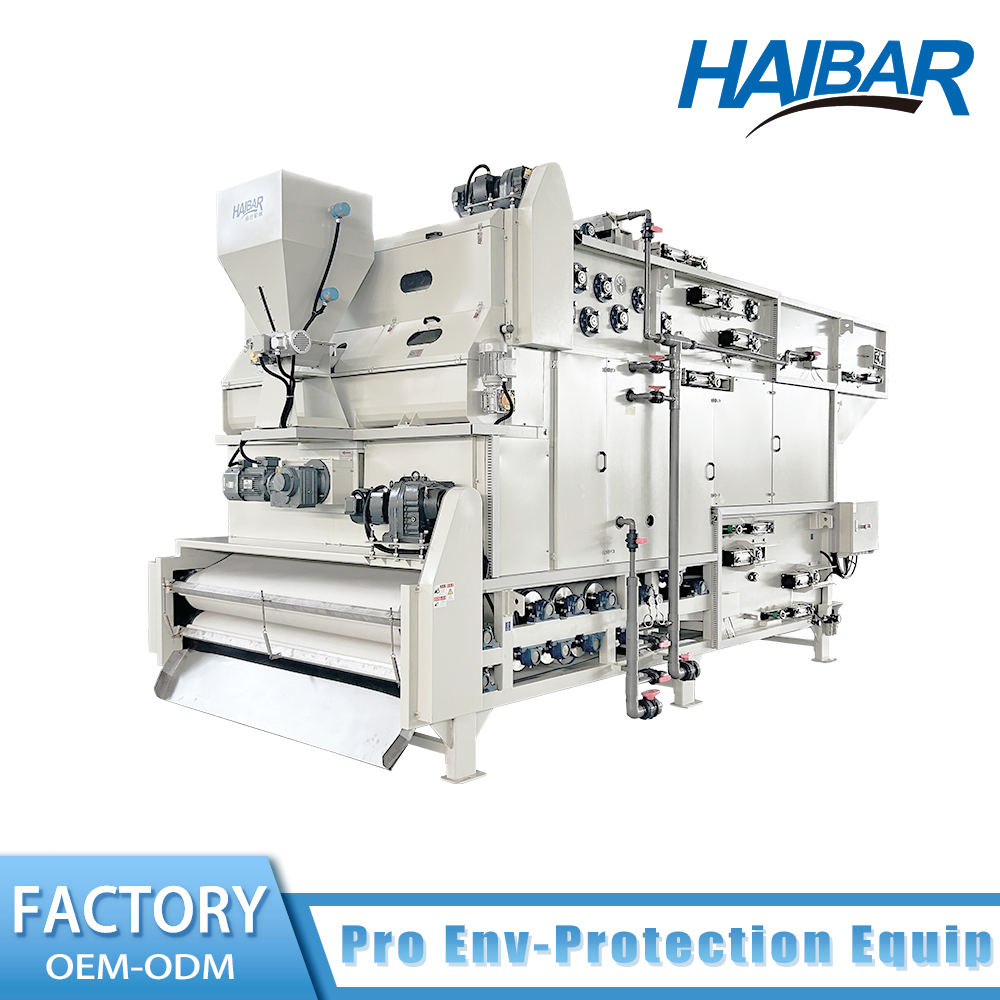
Sludge Deep Dewatering System (High-Dryness Belt Press)
The HB-DDS-1500 sludge deep dewatering system (high dryness belt filter press) is an efficient equipment designed to meet various sludge reduction treatment needs. With advanced belt filter press technology, it provides stable and energy-saving solutions for the sludge treatment process. Modular assembly, flexible installation: The equipment body adopts modular design, which can flexibly adjust the layout according to the site space, making installation convenient and low difficulty in later...
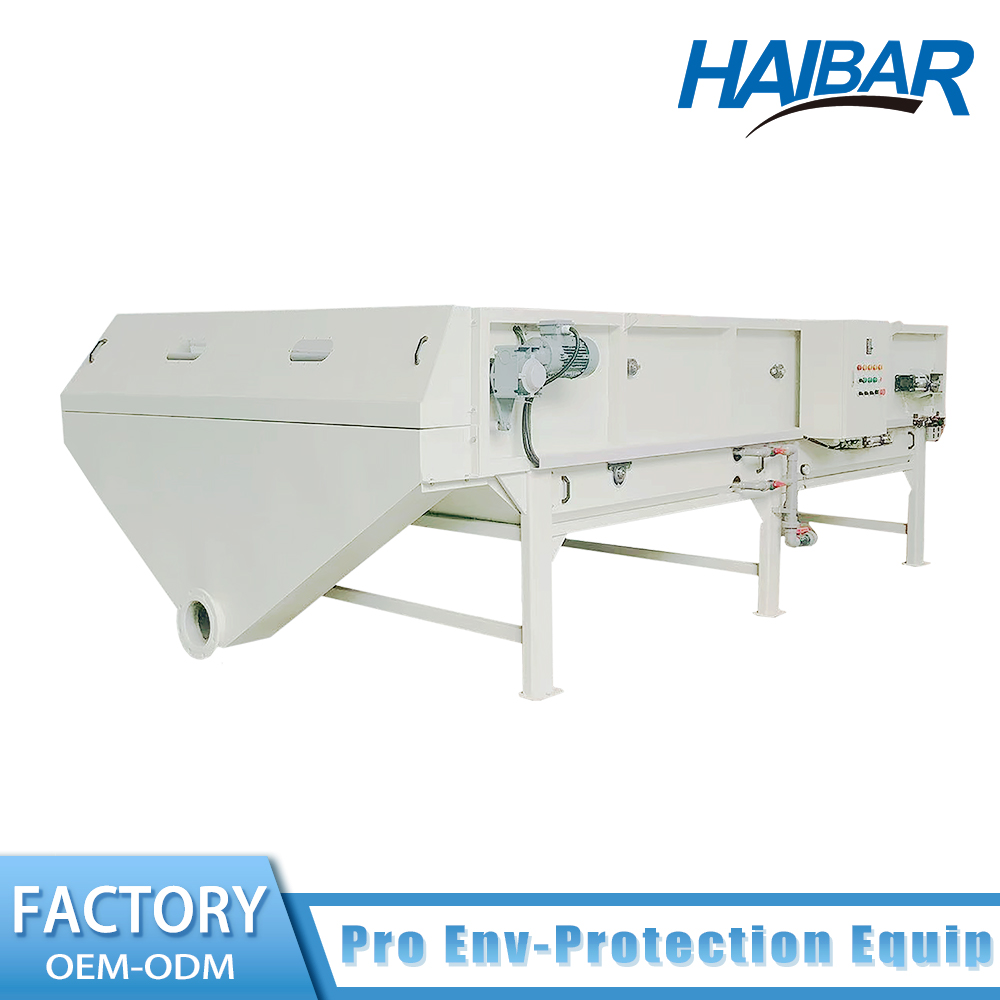
Belt Thickener HBT-1000 equipment
The HAIBAR Belt Thickener HBT-1000 is a professional environmental protection equipment designed for efficient sludge dewatering in wastewater treatment. It utilizes a belt-type filtration system to remove moisture from sludge, reducing its volume and facilitating subsequent disposal or reuse. This unit features a robust, modular design with precision-engineered belts and rollers, ensuring reliable performance and high dewatering efficiency. It operates by passing sludge through a series of...
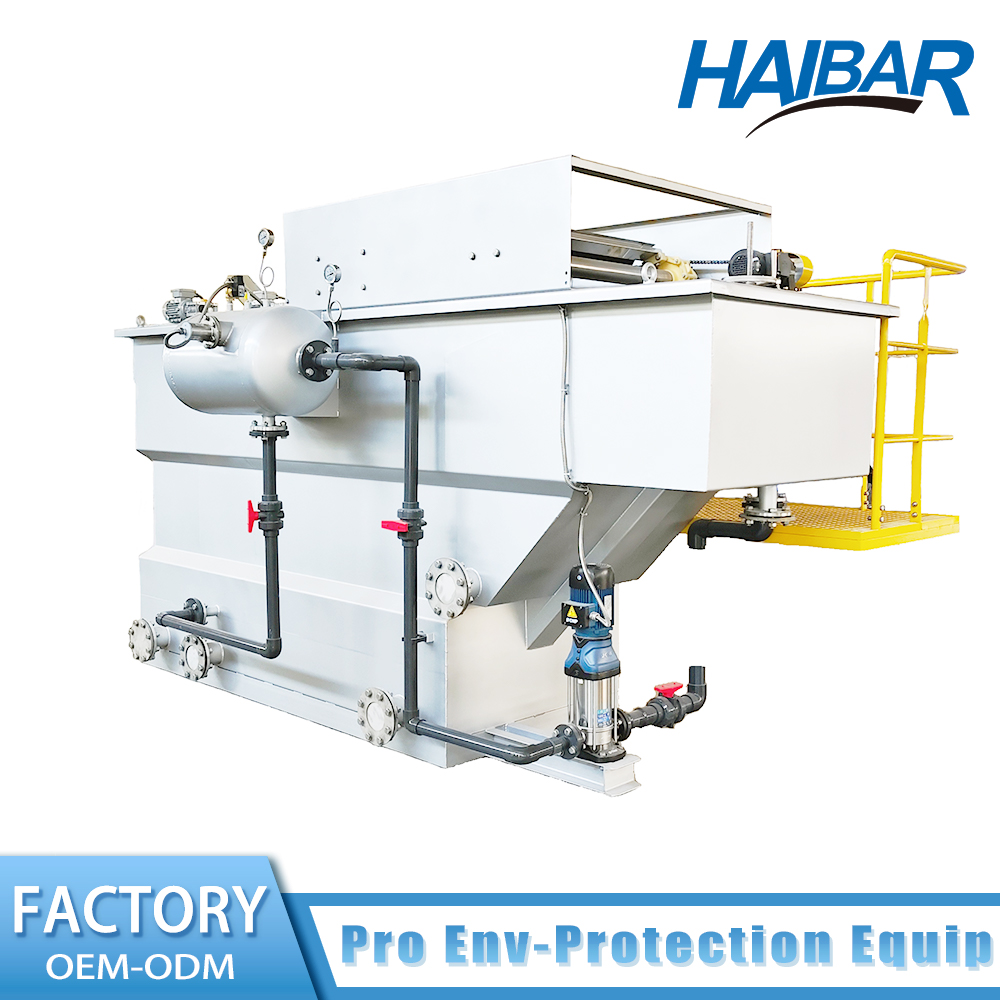
Dissolved Air Flotation (DAF) Unit
The Dissolved Air Flotation (DAF) Unit by HAIBAR is a professional environmental protection equipment designed for efficient water and wastewater treatment. It utilizes the dissolved air flotation principle to separate suspended solids, oils, and other contaminants from liquid streams. This DAF unit features a robust design with integrated dissolved air systems, flotation chambers, and sludge removal mechanisms. It operates by introducing fine air bubbles that attach to contaminants, lifting...
Privacy statement: Your privacy is very important to Us. Our company promises not to disclose your personal information to any external company with out your explicit permission.
Fill in more information so that we can get in touch with you faster
Privacy statement: Your privacy is very important to Us. Our company promises not to disclose your personal information to any external company with out your explicit permission.