
Pulp & Paper Wastewater Treatment

Industry Background
Wastewater generated from the pulp and paper industry contains a high concentration of fibres, suspended solids, colloidal substances, and residual chemical additives. The resulting sludge is typically viscous, difficult to settle, and prone to clogging. With a relatively low solids concentration and loose structure, this sludge places considerable demands on the filtration performance, continuous operation stability, and fabric-cleaning system of dewatering equipment. Without proper handling, issues such as fluctuating load, belt clogging, and inconsistent cake formation may occur, ultimately affecting treatment efficiency and overall plant operating costs.
Technical Approach
To address the high fibre content and adhesive nature of pulp and paper sludge, Haibar’s belt filter press incorporates a high-capacity gravity drainage section to enhance initial dewatering and ensure rapid sludge mat formation. The pressing section features a multi-stage progressive pressure design that increases cake solids without damaging the fibre structure. The system is equipped with an efficient automatic fabric cleaning mechanism to maintain long-term permeability and prevent the clogging and throughput reduction typically caused by fibre accumulation. With a modular configuration, the equipment can be adapted to facilities of different scales or retrofit needs, offering stable, cost-effective sludge dewatering performance.
On-site Photos
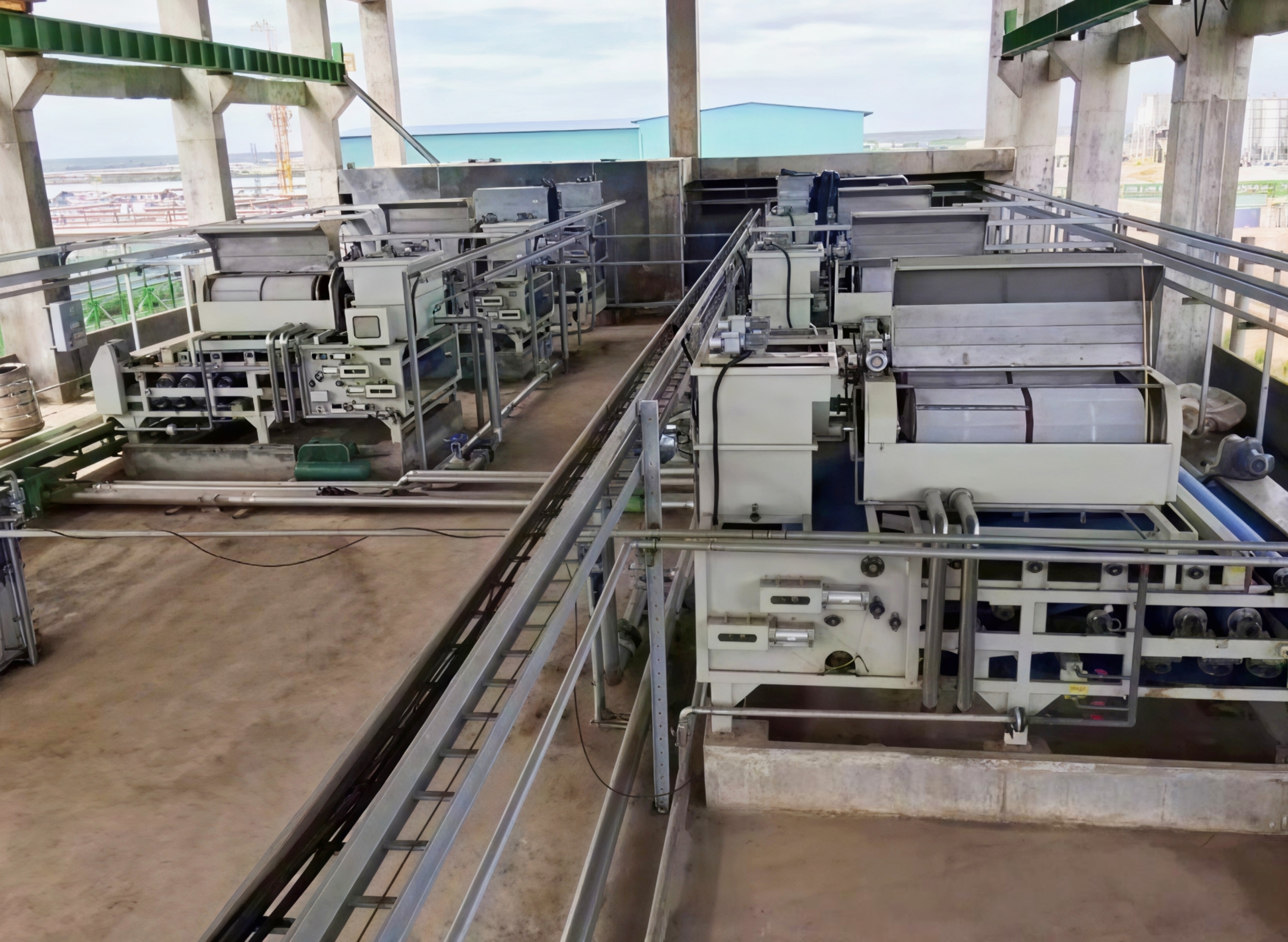
The photos were taken at the wastewater treatment facility of a pulp and paper mill in East China. The Haibar belt filter press shown in the images is continuously processing fibre-rich paper sludge with stable operation. The filter fabric remains clean, and the tensioning and tracking systems respond accurately. A uniform sludge layer and consistent dewatering performance can be observed, demonstrating the machine’s high throughput capability and reliability when handling fibre-intensive sludge. Since commissioning, the system has significantly improved dewatering efficiency and reduced downstream transportation and disposal costs for the client.

Share to:


